Date: March 4, 2026
Author: Technical Team at OCvalve
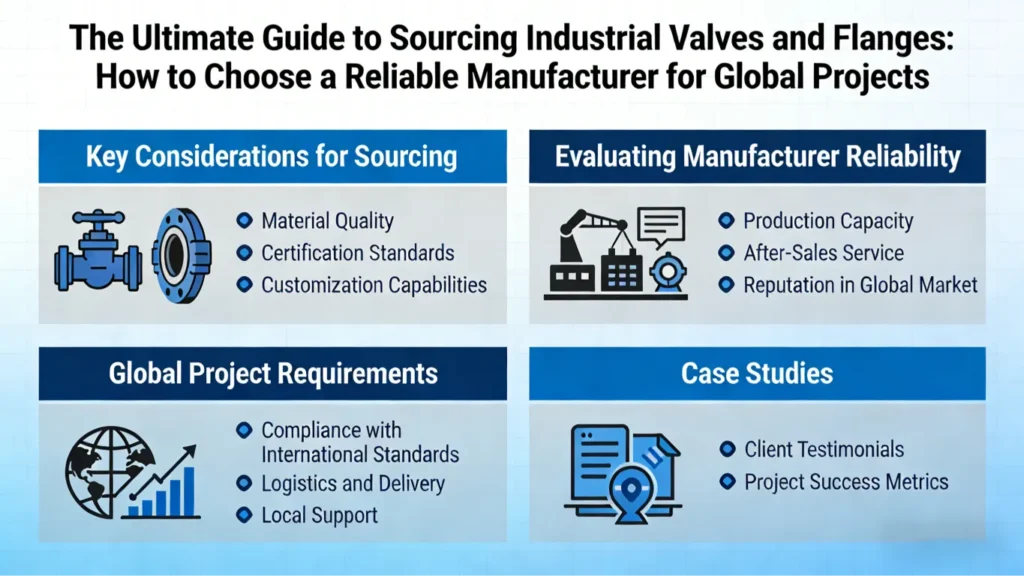
In the complex landscape of global industrial procurement, finding a trustworthy valve manufacturer is about more than just comparing price quotes—it’s about ensuring operational safety, meeting stringent international standards, and guaranteeing long-term project success. As an experienced valve factory specializing in exports to markets across North America, Europe, the Middle East, and Southeast Asia, we understand the critical concerns of international buyers searching for industrial valves: leakage risks, material certification, delivery reliability, and after-sales support.
In this comprehensive guide, we will walk you through the five essential factors to consider when selecting a valve supplier for your oil and gas, petrochemical, or water treatment projects. We’ll also break down the technical jargon and help you navigate the global marketplace to find a partner who truly understands your needs.
1. Define Your Application: Moving Beyond Generic Search Terms
Many procurement professionals begin their search with broad terms like “valve supplier” or “valve company.” However, the most successful and efficient sourcing happens when you translate your specific project requirements into precise technical queries.
Ask yourself: Where will this valve be installed?
- High-Pressure Environments: If you need high pressure valves for a wellhead or pipeline, you must look for manufacturers with expertise in forged steel valves and certifications like API 6A or API 6D.
- Extreme Temperatures: For LNG terminals or cryogenic applications, you require cryogenic valves designed to withstand extreme cold without brittle failure.
- Corrosive Media: In chemical processing, a standard stainless steel valve (like 304) may fail quickly. You might need alloy steel valves, duplex stainless steel, or special linings.
- Automation Needs: Is this for a new automated plant? You’ll likely need control valves with smart positioners, or actuated valves (electric, pneumatic, or hydraulic) that integrate seamlessly with your DCS or PLC systems.
Supplier Takeaway: A top-tier industrial valve manufacturer will not just sell you a product; they will ask about your media, pressure, temperature, and connection standards (e.g., flange dimensions according to ASME B16.5 or B16.47) before making a recommendation.
2. Material Science & Certification: The Backbone of Quality
The choice of material directly dictates the longevity and safety of your gate valve, globe valve, or check valve. A common pitfall is assuming all stainless steel is the same.
- Material Traceability: A reliable valve factory must provide full material traceability, including Mill Test Reports (MTRs) confirming chemical and physical properties.
- Corrosion Resistance: For offshore or chloride-rich environments, specifying the correct material—like 316L stainless steel, Monel, or Inconel—is non-negotiable.
- Global Compliance & Certification:
- For the Americas: Look for API certified valves (API 600 for gate valves, API 602 for forged steel valves, API 608 for ball valves) and compliance with ASME/ANSI standards.
- For Europe: Ensure the supplier provides CE marked valves and complies with the Pressure Equipment Directive (PED).
- For Global Projects: ISO 9001 certification is the baseline for a quality management system, but also look for ISO 14001 (environmental) and ISO 45001 (occupational health and safety).
3. Beyond the Valve: The Critical Role of Flanges
In the world of piping, a valve is only as good as its connection. When sourcing industrial valves, you cannot overlook the companion flanges. Mismatched flanges are a leading cause of leaks and installation delays.
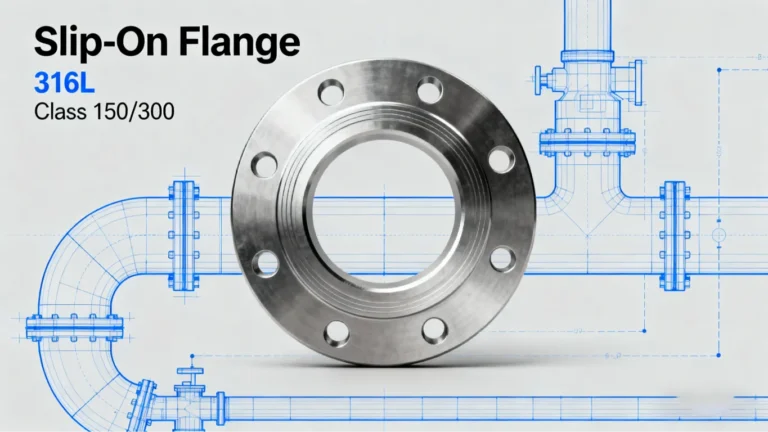
- Flange Types & Standards: Are you looking for weld neck flanges, slip-on flanges, blind flanges, or threaded flanges? Ensure your valve manufacturer can supply matching pipe flanges manufactured to the same standard (e.g., ASME B16.5, EN 1092-1, or JIS B2220).
- Facing and Finish: The flange face (Raised Face, Flat Face, Ring Type Joint) and surface finish are critical for gasket sealing. A comprehensive valve supplier should offer forged flanges with the correct facing for your application.
- One-Stop Sourcing: Dealing with a single supplier for both forged steel valves and their mating flanges simplifies logistics, ensures metallurgical compatibility, and reduces lead times. This is a key advantage of partnering with a full-line flange manufacturer.
4. The Rise of Smart Valves and Industry 4.0
The industrial valve industry is undergoing a digital transformation. The demand for smart valves equipped with sensors and digital positioners is surging as plants seek to optimize performance and enable predictive maintenance.
- Control Valves with Digital Integration: Modern control valves often feature IoT-enabled smart actuators that provide real-time data on valve position, torque, and temperature. This data is crucial for AI-driven maintenance schedules.
- Partial Stroke Testing: For emergency shutdown valves (ESD) or safety valves, suppliers should offer capabilities like partial stroke testing, which allows you to test the valve’s functionality without shutting down the entire process.
- Leakage Class: When specifying a globe valve or ball valve for critical isolation, demand leakage class testing according to ANSI/FCI 70-2 (Class IV, V, or VI) or ISO 5208. A high pressure ball valve with a zero-leakage (Class VI) seat is often mandatory for gas applications.
5. Evaluating the Supplier: Capability, Capacity, and Reliability
For B2B buyers seeking a long-term partnership, the factory’s capability is more important than the unit price. A delayed shipment or a quality failure can halt an entire project, costing thousands of dollars a day.
- Manufacturing Capabilities: Does the valve factory perform its own casting and forging, or does it outsource? Does it have in-house CNC machining, testing, and coating lines? This control over the supply chain is a hallmark of a quality manufacturer.
- OEM/ODM Expertise: If you need a custom valve with a special length, material, or trim, can the valve company accommodate you? A strong OEM/ODM partner will have an engineering team ready to work from your drawings or samples.
- Quality Control & Testing: Every valve should undergo rigorous testing. This includes shell tests, seat leakage tests, and optionally, high-pressure gas tests or fugitive emission tests. A reputable valve manufacturer will have a dedicated QC team and in-house test benches.
Common Procurement Pitfalls to Avoid
- Prioritizing Price Over Total Cost of Ownership (TCO): A cheap butterfly valve may fail within a year, leading to downtime, replacement costs, and potential safety hazards. Consider the 5-year TCO, not just the initial purchase price.
- Incomplete Specifications: An RFQ that simply says “need a ball valve” invites confusion. Always specify: size, pressure class (e.g., 150LB, 300LB), end connections (e.g., flanged end, butt weld), material (body, ball, seat), and operator type.
- Ignoring After-Sales Support: What happens if a valve arrives damaged or a part is missing? Does the supplier have a local agent or a responsive support team? Check their warranty terms and spare parts availability.
Conclusion
Sourcing industrial valves and flanges for global projects is a critical task that demands a partner with technical expertise, global certifications, and manufacturing reliability. Whether you need a single high-pressure gate valve for a turnaround or a complete package of actuated valves and pipe flanges for a new construction project, the right manufacturer is your greatest asse