When it comes to industrial piping systems, selecting the right valve type is crucial for optimal performance, safety, and cost-efficiency. Among the most commonly used valves are ball valves and gate valves. Both serve the fundamental purpose of controlling fluid flow, but they operate differently and excel in distinct applications.
In this comprehensive guide, we’ll break down the key differences between ball valves and gate valves, helping you make an informed decision for your specific project requirements.
What is a Ball Valve?
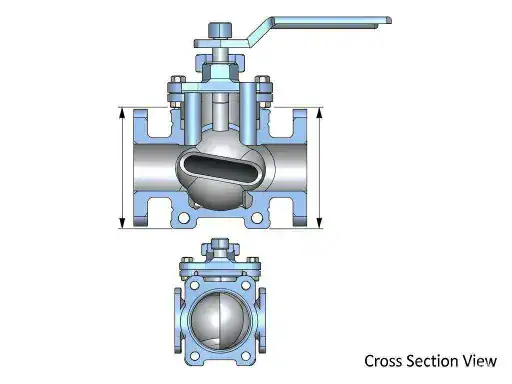
A ball valve is a quarter-turn valve that uses a hollow, pivoting ball to control flow. When the ball’s bore aligns with the flow path, the valve is open; when rotated 90 degrees, the solid side of the ball blocks the flow, shutting it off completely.
Key Features of Ball Valves:
- Quick operation: 90-degree turn for full open/close
- Bubble-tight shutoff: Excellent sealing capability
- Low torque requirement: Easy to operate manually or with actuators
- Compact design: Space-saving structure
- Versatile applications: Suitable for various media including gases, liquids, and slurries
Common Ball Valve Types:
- Standard port ball valves: Full flow capacity
- Reduced port ball valves: Smaller bore for cost efficiency
- V-port ball valves: Designed for throttling and flow control
- Trunnion ball valves: High-pressure applications
- Cryogenic ball valves: Low-temperature service
Learn more about our control ball valves
What is a Gate Valve?
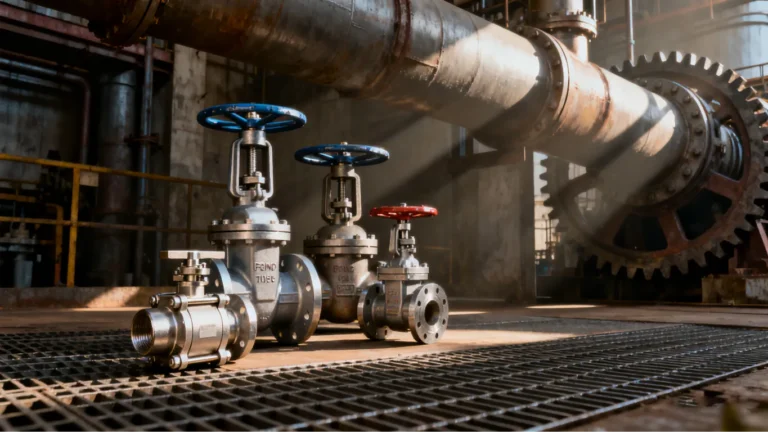
A gate valve (also known as a sluice valve) uses a gate or wedge that moves perpendicular to the flow path to control media. When fully open, the gate retracts completely into the valve body, allowing unrestricted flow. When closed, the gate drops into the flow path to block it.
Key Features of Gate Valves:
- Straight-through flow: Minimal pressure drop when fully open
- Full bore design: No flow restriction
- Bidirectional flow: Works equally well in either direction
- Slow operation: Requires multiple turns to open/close
- Used primarily for on/off control: Not ideal for throttling
Common Gate Valve Types:
- Solid wedge gate valves: General service applications
- Flexible wedge gate valves: Temperature variations
- Split wedge gate valves: Corrosive services
- Parallel slide gate valves: High-pressure applications
- Metal-seated gate valves: High-temperature service
Ball Valve vs Gate Valve: Detailed Comparison
1. Operation and Control
| Feature | Ball Valve | Gate Valve |
|---|---|---|
| Operation type | Quarter-turn (90°) | Multi-turn (requires several rotations) |
| Opening speed | Fast (instant) | Slow (gradual) |
| Flow control | Good for on/off, V-port for throttling | Poor for throttling; best for on/off only |
| Torque required | Low | Higher, especially when closing |
Why it matters: If you need quick shutoff in emergency situations, ball valves are the better choice. Their quarter-turn operation allows rapid response, which is critical in safety-critical applications.
2. Sealing and Leakage
| Feature | Ball Valve | Gate Valve |
|---|---|---|
| Shutoff quality | Bubble-tight (Class VI) | Good, but may degrade over time |
| Sealing mechanism | Ball seats against soft seals (PTFE, metal) | Gate wedges against seat rings |
| Leakage risk | Very low | Moderate, especially with wear |
| Maintenance interval | Longer service life | Requires more frequent maintenance |
Why it matters: For applications requiring absolute shutoff (like hazardous chemical transfer), ball valves provide superior sealing performance. However, gate valves remain popular in water and wastewater systems where perfect shutoff isn’t critical.
3. Pressure Drop and Flow Capacity
| Feature | Ball Valve | Gate Valve |
|---|---|---|
| Flow characteristics | Minimal restriction (full bore) | Zero restriction when fully open |
| Pressure drop | Low (similar to straight pipe) | Very low (essentially no obstruction) |
| Flow coefficient (Cv) | High | Very high |
| Suitable for | General service, throttling (V-port) | Large diameter, high-flow applications |
Why it matters: In large-diameter pipelines (6 inches and above), gate valves are often preferred because they offer virtually zero pressure drop when fully open. This is crucial for energy efficiency in long-distance pipeline systems.
4. Size and Weight
| Feature | Ball Valve | Gate Valve |
|---|---|---|
| Size range | ½” to 48″+ | 2″ to 60″+ |
| Weight | Lighter for same size | Heavier, especially large sizes |
| Space requirement | Compact | Requires more space for operation |
| Installation | Easier (lighter weight) | More challenging (heavier) |
Why it matters: For space-constrained installations or applications requiring frequent maintenance access, ball valves’ compact design offers significant advantages.
5. Cost Considerations
| Feature | Ball Valve | Gate Valve |
|---|---|---|
| Initial cost | Higher for same size | Generally lower |
| Maintenance cost | Lower (longer lifespan) | Higher (wear parts need replacement) |
| Lifecycle cost | Competitive | Can be higher over time |
| Actuation cost | Lower torque requirements | Higher actuator costs |
Why it matters: While ball valves have a higher upfront cost, their longer service life and lower maintenance requirements often make them more cost-effective over the lifecycle of the installation.
When to Choose a Ball Valve
Ball valves are the ideal choice when you need:
✅ Quick shutoff capability – Emergency situations require immediate response ✅ Tight sealing – Hazardous fluids, toxic chemicals, or high-purity systems ✅ Frequent operation – Valves that are opened/closed regularly ✅ Compact installation – Limited space available ✅ Low maintenance – Want to minimize downtime and servicing ✅ Throttling applications – With V-port ball valves for flow control ✅ Corrosive services – Available in various materials (stainless steel, Hastelloy, etc.)
Typical applications:
- Oil and gas pipelines
- Chemical processing plants
- Pharmaceutical and food industry
- Water treatment facilities
- HVAC systems
- Compressed air systems
Explore our ball valve collection
When to Choose a Gate Valve
Gate valves are the better choice when you need:
✅ Minimal pressure drop – Long pipelines where energy efficiency matters ✅ Large diameter applications – 6 inches and above ✅ Bidirectional flow – Flow can go in either direction ✅ Infrequent operation – Valves that stay open or closed for long periods ✅ High-temperature service – Metal-seated designs handle extreme heat ✅ Low initial cost – Budget-conscious projects ✅ Slurry services – Can handle media with particulates
Typical applications:
- Water and wastewater treatment
- Power plants (boiler feedwater)
- Oil and gas transmission pipelines
- Cooling water systems
- Steam systems
- Mining and slurry handling
Key Advantages and Disadvantages
Ball Valve
Advantages:
- Quick operation (90° turn)
- Excellent sealing (bubble-tight)
- Low torque requirement
- Compact and lightweight
- Minimal pressure drop
- Suitable for throttling (V-port design)
- Long service life
- Good for frequent operation
Disadvantages:
- Higher initial cost
- Not ideal for large diameters (>24″)
- Ball can crack under thermal stress
- Seat damage possible with abrasive media
Gate Valve
Advantages:
- Zero pressure drop when open
- Suitable for large diameters
- Lower initial cost
- Bidirectional flow
- Can handle high temperatures
- Good for on/off service
- Simple construction
Disadvantages:
- Slow operation (multi-turn)
- Requires more space
- Higher torque for operation
- Prone to leakage over time
- Gate can stick if not operated frequently
- Not suitable for throttling
- Higher maintenance requirements
Making the Right Choice: Decision Checklist
Use this checklist to determine which valve type is best for your application:
Choose a Ball Valve if:
- You need fast shutoff (emergency response)
- Tight sealing is critical (hazardous media)
- Valve will be operated frequently
- Space is limited
- Low maintenance is a priority
- Application size is under 24 inches
Choose a Gate Valve if:
- Minimum pressure drop is essential
- Large diameter pipes (6″+)
- Valve will rarely be operated
- Budget is a primary concern
- High-temperature service required
- Slurry or particulate-laden media
Industry Standards and Certifications
Both ball valves and gate valves should comply with relevant industry standards:
Ball Valve Standards:
- API 6D: Specification for Pipeline Valves
- API 608: Metallic Ball Valves
- ISO 17292: Metallic valves for pipework
- MSS SP-72: Direction of flow for ball valves
- NACE MR0175: Materials for sour service
Gate Valve Standards:
- API 600: Factory Construction of Gate Valves
- API 602: Compact Cast Iron Gate Valves
- MSS SP-80: Steel Gate, Globes, and Check Valves
- ISO 5752: Cast iron gate valves
- BS 5149: Industrial valves
At Oucang Valve, all our products are manufactured in compliance with international standards including ANSI, ASME, ISO, EN, and DIN standards. We hold ISO 9001 certification and can provide CE marking for European market compliance.
FAQ: Ball Valve vs Gate Valve
Q1: Can I use a ball valve for throttling?
A: Yes, but only with V-port ball valves. Standard ball valves are designed for on/off service and can suffer damage if used for throttling. V-port ball valves have a modified ball design that allows precise flow control.
Q2: Which valve is better for high-pressure applications?
A: Both can handle high pressures, but ball valves are generally preferred for pressures above 1500 PSI due to their superior sealing capability. For very high pressures, consider trunnion-mounted ball valves.
Q3: Are gate valves better for water applications?
A: Gate valves are traditionally used in water systems, especially for large-diameter pipelines. However, ball valves are increasingly popular in water treatment due to their quick operation and reliable shutoff.
Q4: Which valve requires less maintenance?
A: Ball valves generally require less maintenance due to their simpler design and longer seat life. Gate valves may require more frequent maintenance of packing and seats, especially in harsh service conditions.
Q5: Can I replace a gate valve with a ball valve?
A: In most cases, yes. However, consider the following:
- Verify space constraints (ball valves may be longer)
- Check torque requirements (different actuation needs)
- Ensure compatibility with existing piping
- Consult with engineering team for critical applications
Conclusion: Making the Right Choice

Choosing between a ball valve and a gate valve depends on your specific application requirements. There’s no one-size-fits-all answer, but understanding the key differences will help you make an informed decision.
For most general industrial applications, ball valves offer better performance, reliability, and lifecycle cost despite the higher initial investment.
For large-diameter, low-cost, on/off service applications, gate valves remain a solid and cost-effective choice.
At Oucang Valve, we offer a comprehensive range of both ball valves and gate valves, manufactured to international standards with strict quality control. Whether you need standard models or custom solutions, our technical team can help you select the right valve for your application.
Ready to Source Quality Valves?
Oucang Valve specializes in industrial valves and flanges with over 20 years of manufacturing experience. Our products comply with ANSI, ASME, ISO, EN, and DIN standards, and we offer OEM/ODM services for custom requirements.
Contact us today for:
- Free technical consultation
- Competitive factory pricing
- Fast delivery times
- Custom solutions for your project
Get a Quote | Explore Our Products
References and Further Reading
- API Standard 6D: Specification for Pipeline Valves
- API Standard 600: Factory Construction of Gate Valves
- ISO 5208: Industrial valves – Pressure testing of valves
- NACE MR0175/ISO 15156: Materials for use in H₂S-containing environments
- Manufacturer technical documentation