When designing industrial piping systems, selecting the right valve type is crucial for optimal performance and efficiency. Two commonly used valve types are butterfly valves and check valves. While they serve different purposes, understanding their differences is essential for proper system design.
In this comprehensive guide, we’ll explore the key differences between butterfly valves and check valves, helping you make informed decisions for your piping projects.
What is a Butterfly Valve?
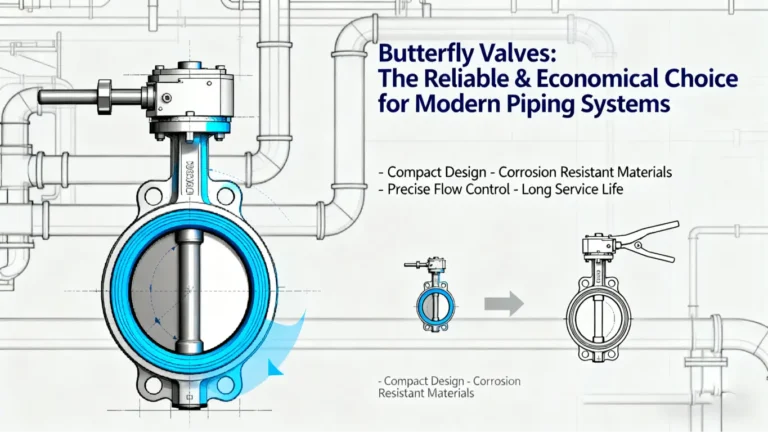
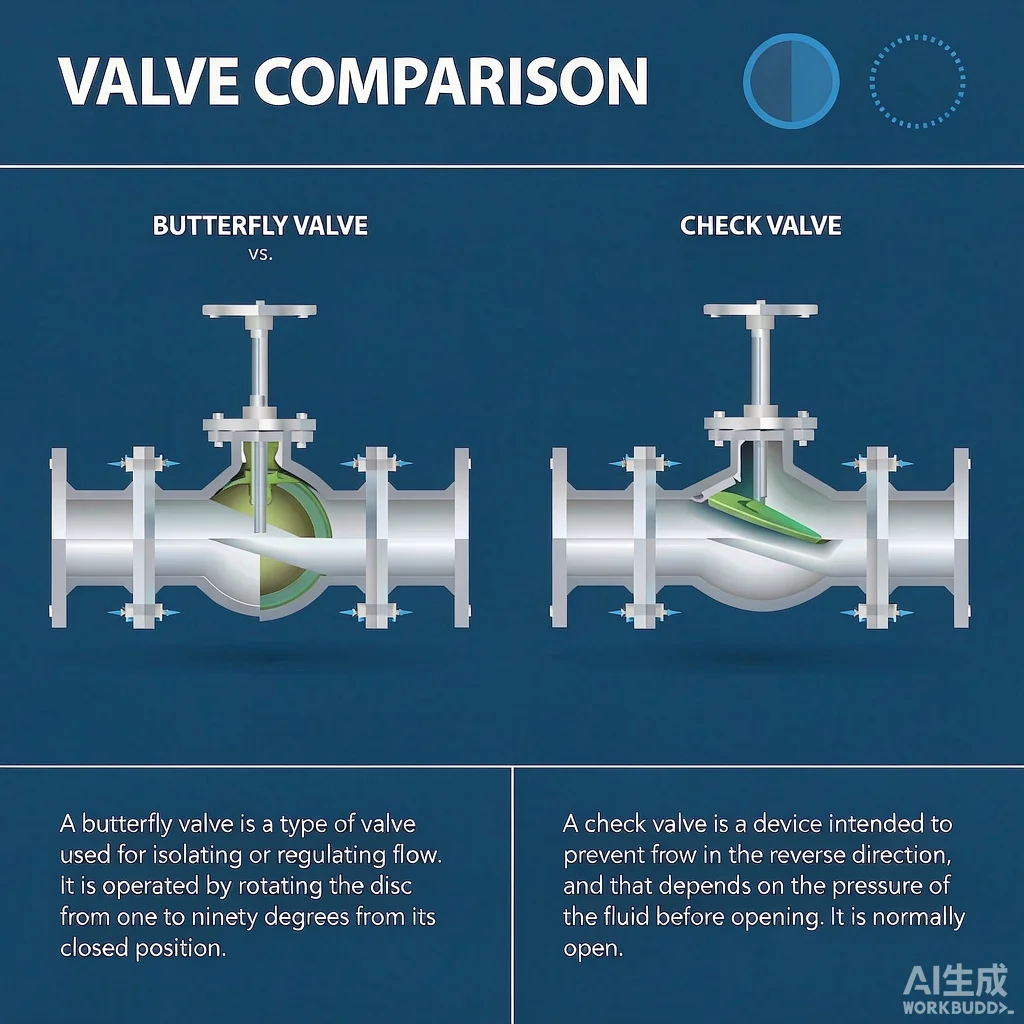
A butterfly valve is a quarter-turn valve that uses a disc to control flow. The disc rotates around a central stem, opening or closing the flow path when the handle or actuator is turned 90 degrees.
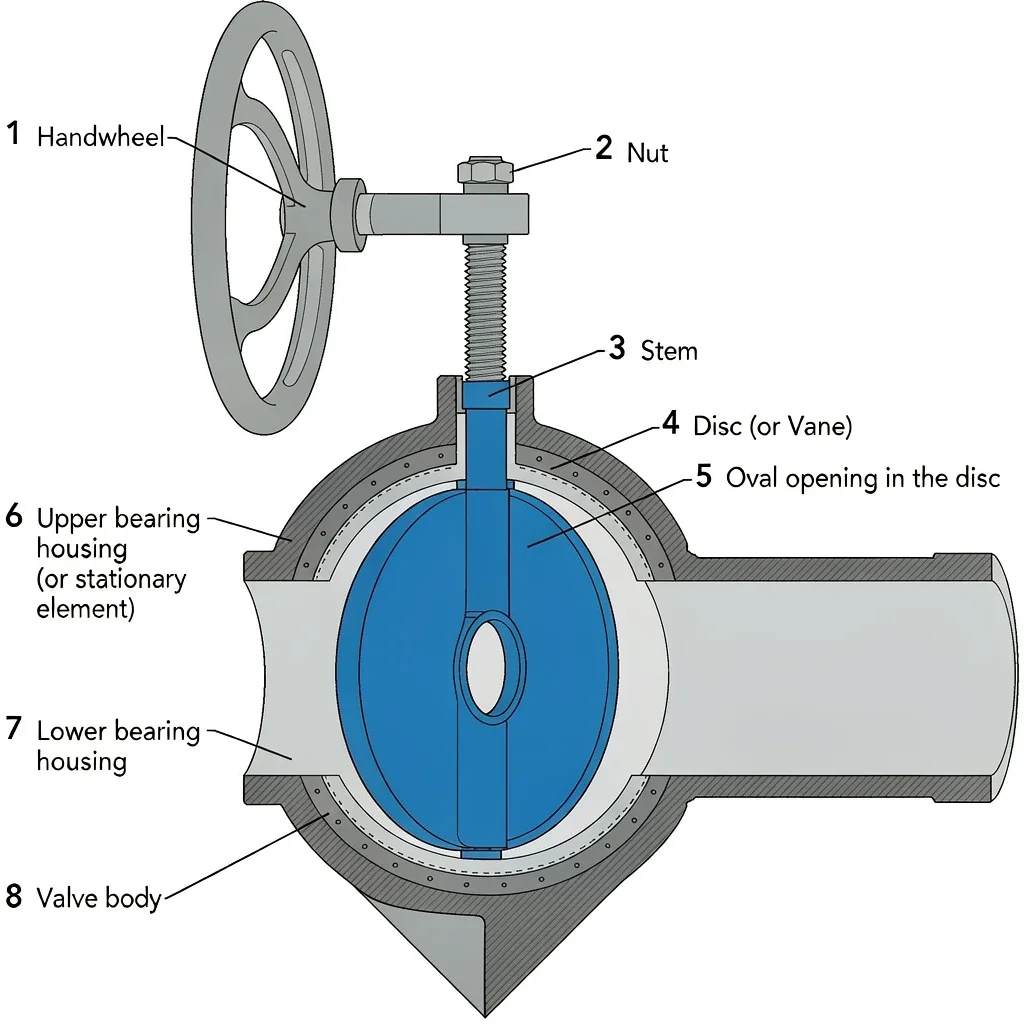
Key Features of Butterfly Valves:
- Quick operation: 90-degree turn for full open/close
- Compact design: Space-saving structure
- Lightweight: Lower weight compared to gate or globe valves
- Cost-effective: Generally more economical
- Versatile applications: Suitable for various media
Common Butterfly Valve Types:
- Reserved eccentric butterfly valves: Improved sealing
- Double eccentric butterfly valves: Better performance
- Triple eccentric butterfly valves: High-performance sealing
- Wafer butterfly valves: Compact, cost-effective
- Lugged butterfly valves: Allows downstream isolation
Learn more about our butterfly valves
What is a Check Valve?
A check valve (also known as a non-return valve or one-way valve) is an automatic valve that allows flow in only one direction. It prevents backflow without manual operation.
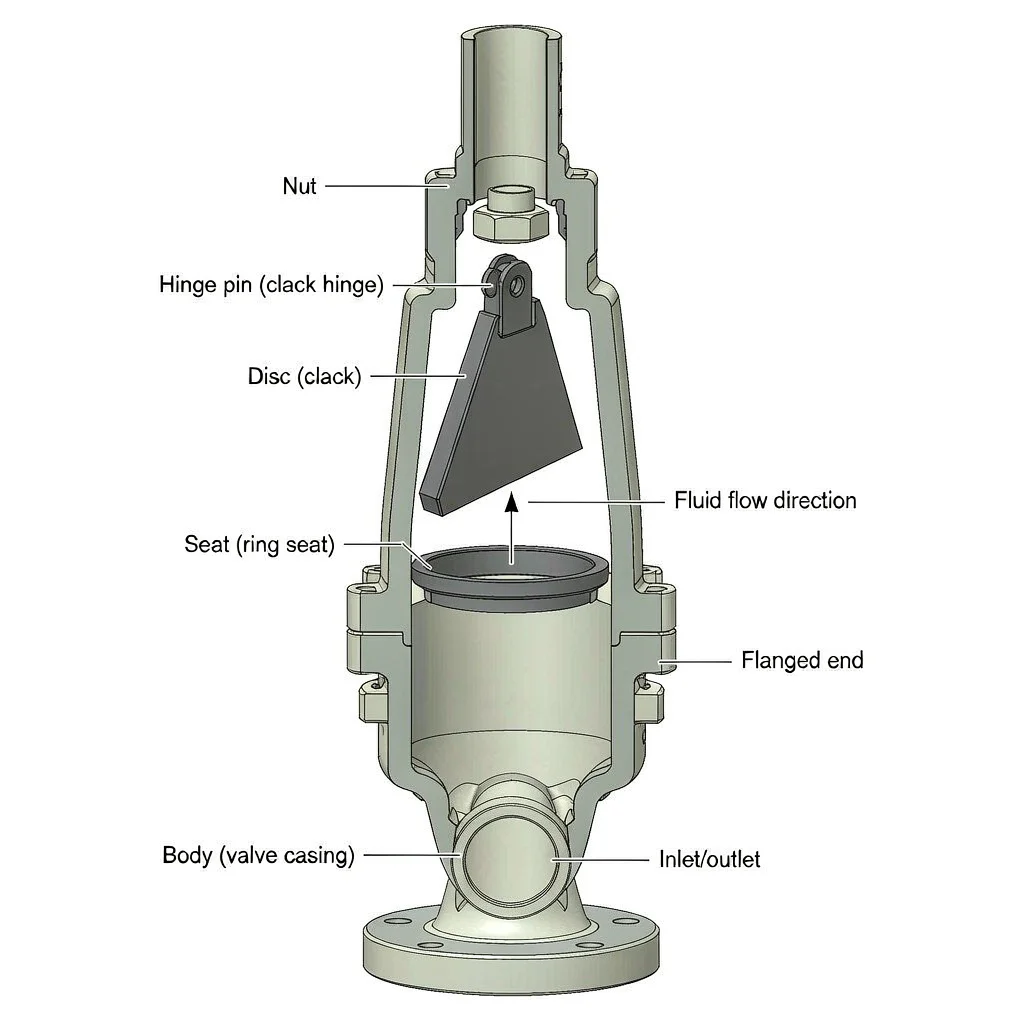
Key Features of Check Valves:
- Automatic operation: No manual intervention needed
- Self-acting: Opens with forward flow, closes with reverse flow
- Prevents backflow: Protects equipment and systems
- Various designs: Multiple configurations available
- Critical for safety: Prevents damage from reverse flow
Common Check Valve Types:
- Swing check valves: Most common type
- Lift check valves: Vertical movement
- Butterfly check valves: Compact design
- Tilting disc check valves: Low pressure drop
- Dual plate check valves: Quiet operation
- Ball check valves: Small size applications
Explore our check valve products
EOF—
Butterfly Valve vs Check Valve: Key Differences
Understanding the fundamental differences between these two valve types is essential for proper selection and application.
Comparison Table
| Feature | Butterfly Valve | Check Valve |
| Primary Function | Flow control and isolation | Prevents backflow |
| Operation Type | Manual or automated | Automatic (self-acting) |
| Control Method | Quarter-turn operation | No manual control |
| Flow Regulation | Can throttle flow | Only allows one-direction flow |
| Directionality | Bidirectional (usually) | Unidirectional only |
| Pressure Drop | Low when open | Varies by type |
| Installation | Any orientation | Must follow flow direction |
| Maintenance | Regular maintenance needed | Low maintenance |
| Cost | Generally lower | Generally higher |
| Applications | Isolation and throttling | Backflow prevention |
Detailed Functional Comparison
1. Primary Purpose
Butterfly Valve:
- Flow control: Regulates flow rate by partially opening or closing the disc
- Isolation: Provides complete shut-off when fully closed
- Throttling: Can modulate flow at various positions
- Manual/Auto operation: Can be operated manually or with actuators
Check Valve:
- Backflow prevention: Automatically prevents reverse flow
- System protection: Protects pumps and equipment from damage
- No manual control: Operates solely based on flow direction
- Automatic response: Opens and closes without human intervention
2. Operating Mechanism
Butterfly Valve:
Check Valve:
3. Flow Characteristics
Butterfly Valve:
- Low pressure drop when fully open (minimal obstruction)
- Good throttling capability at partial openings
- Bidirectional flow (most types)
- Quick operation (90-degree turn)
Check Valve:
- Variable pressure drop depending on type
- No throttling – either open or closed
- Unidirectional flow only
- Fast response to flow changes
When to Use Butterfly Valves
Butterfly valves are the preferred choice when you need:
✅ Flow isolation with compact design ✅ Throttling or modulation of flow ✅ Quick shut-off operation ✅ Cost-effective solution for large diameters ✅ Lightweight application where space is limited ✅ Corrosive services with proper material selection ✅ Slurry or viscous fluids (with proper design) ✅ Frequent operation requiring quick response
Typical Butterfly Valve Applications:
- Water treatment plants: Main line isolation and control
- HVAC systems: Chilled and hot water control
- Fire protection systems: Main supply valves
- Power plants: Cooling water systems
- Chemical processing: Process isolation
- Oil and gas: Pipeline isolation
- Marine applications: Ballast and cargo systems
When to Use Check Valves
Check valves are the preferred choice when you need:
✅ Backflow prevention in piping systems ✅ Equipment protection from reverse flow ✅ Automatic operation without manual intervention ✅ Pump protection from water hammer ✅ Prevent contamination from reverse flow ✅ Maintain system pressure in vertical runs ✅ Protect sensitive equipment from damage ✅ Ensure safety in critical systems
Typical Check Valve Applications:
- Pump discharge lines: Prevent pump reversal
- Boiler feedwater systems: Maintain water flow
- Compressed air systems: Prevent backflow to compressors
- Chemical dosing systems: Prevent contamination
- Heat exchanger systems: Protect against reverse flow
- Cooling water systems: Maintain proper flow direction
- Fire protection systems: Prevent backflow to municipal supply
Technical Specifications Comparison
Pressure Ratings
Butterfly Valve Pressure Classes:
- Low pressure: Class 125, 150 (up to 285 psi)
- Medium pressure: Class 300 (up to 740 psi)
- High pressure: Class 600 (up to 1,480 psi)
- Special designs: Up to Class 900+
Check Valve Pressure Classes:
- Low pressure: Class 125, 150
- Medium pressure: Class 300
- High pressure: Class 600, 900
- Special designs: Up to Class 2500
Size Range
Butterfly Valve Sizes:
- Small: 2″ to 12″ (DN50 to DN300)
- Medium: 12″ to 48″ (DN300 to DN1200)
- Large: 48″ to 120″+ (DN1200 to DN3000+)
- Most common: 2″ to 24″ for general use
Check Valve Sizes:
- Small: 1″ to 6″ (DN25 to DN150)
- Medium: 6″ to 24″ (DN150 to DN600)
- Large: 24″ to 48″+ (DN600 to DN1200+)
- Most common: 2″ to 12″ for general use
Temperature Range
Butterfly Valve Temperature Range:
- Standard: -20°C to 200°C (-4°F to 392°F)
- High temperature: Up to 500°C (932°F) with special materials
- Low temperature: Down to -196°C (-321°F) for cryogenic service
Check Valve Temperature Range:
- Standard: -20°C to 200°C (-4°F to 392°F)
- High temperature: Up to 600°C (1112°F) with special materials
- Low temperature: Down to -196°C (-321°F) for cryogenic service
Material Options
Butterfly Valve Materials
Body Materials:
- Cast iron: Cost-effective, general service
- Carbon steel: High strength, industrial applications
- Stainless steel: Corrosion resistance, hygienic service
- Duplex stainless: Enhanced corrosion resistance
- Bronze/Brass: Marine and water applications
- Plastic-lined: Corrosive chemical services
Disc Materials:
- Cast iron: General water service
- Stainless steel 304/316: Corrosive services
- Nickel-aluminum bronze: Marine applications
- Titanium: Seawater and aggressive chemicals
- Coppor-based alloys: Special applications
Seat Materials:
- EPDM: General water service
- Viton (FKM): High temperature and chemicals
- PTFE: corrosive chemicals and high purity
- NBR: Oil and fuel services
- HNBR: Enhanced temperature and chemical resistance
Check Valve Materials
Body Materials:
- Cast iron: General water service
- Carbon steel: Industrial applications
- Stainless steel: Corrosive services
- Brass: Small diameter applications
- Bronze: Marine environments
- Special alloys: Aggressive chemicals
Internal Components:
- Stainless steel: Discs, hinges, springs
- Brass: Small check valves
- Special alloys: Corrosive services
- Elastomers: Seals and gaskets
Installation Considerations
Butterfly Valve Installation
Best Practices:
- ✅ Install with stem horizontal or downward
- ✅ Ensure proper support for large valves
- ✅ Follow torque specifications for bolts
- ✅ Check alignment before tightening
- ✅ Allow space for operation
Common Mistakes:
- ❌ Installing with stem vertical (can cause leakage)
- ❌ Over-tightening bolts (distorts body)
- ❌ Using wrong gasket type
- ❌ Not supporting large valves properly
Check Valve Installation
Best Practices:
- ✅ Install with correct flow direction (arrow on body)
- ✅ Ensure proper support
- ✅ Install upstream of equipment to protect
- ✅ Follow manufacturer’s orientation requirements
- ✅ Allow access for maintenance
Common Mistakes:
- ❌ Installing backward (reverse flow direction)
- ❌ Installing in wrong orientation (vertical vs horizontal)
- ❌ Not providing proper support
- ❌ Installing too close to bends or fittings
Maintenance Requirements
Butterfly Valve Maintenance
Regular Maintenance:
- Monthly: Visual inspection, lubricate stem
- Quarterly: Check operation, inspect seats
- Annually: Full inspection, replace wear parts
- As needed: Replace seats, seals, bearings
Common Issues:
| Issue | Cause | Solution |
| Leaking seat | Wear, debris | Clean or replace seat |
| Hard to operate | Packing too tight | Adjust packing nuts |
| Disc sticking | Corrosion, debris | Clean and lubricate |
| Leakage past disc | Worn seats | Replace seat assembly |
Check Valve Maintenance
Regular Maintenance:
- Monthly: Visual inspection, check for leaks
- Quarterly: Test operation, inspect components
- Annually: Full inspection, replace wear parts
- As needed: Replace springs, seals, discs
Common Issues:
| Issue | Cause | Solution |
| Failure to close | Debris, wear | Clean or replace components |
| Water hammer | Rapid closure | Install slow-closing type |
| Leakage when closed | Worn seat | Replace seat or disc |
| Sticking open | Corrosion, debris | Clean and inspect |
Industry Applications Comparison
Water and Wastewater Treatment
Butterfly Valve Applications:
- Main line isolation valves
- Flow control in treatment processes
- Backwash isolation
- Sludge handling systems
- Chemical dosing lines
Check Valve Applications:
- Pump discharge protection
- Process line backflow prevention
- Chemical feed system protection
- Filter isolation
- Pipeline system protection
Power Generation
Butterfly Valve Applications:
- Cooling water systems
- Feedwater isolation
- Boiler auxiliary systems
- Condenser water systems
- Fire protection systems
Check Valve Applications:
- Boiler feedwater protection
- Condensate return systems
- Cooling water protection
- Steam trap systems
- Feedwater pump protection
Oil and Gas
Butterfly Valve Applications:
- Pipeline isolation
- Process control systems
- Storage tank systems
- Loading/unloading systems
- Fire water systems
Check Valve Applications:
- Pipeline backflow prevention
- Pump protection
- Compressor systems
- Storage tank protection
- Process safety systems
Chemical Processing
Butterfly Valve Applications:
- Process isolation
- Chemical dosing control
- Tank farm operations
- Waste treatment systems
- Utility systems
Check Valve Applications:
- Reactor feed protection
- Heat exchanger protection
- Pump discharge protection
- Process safety systems
- Contamination prevention
Cost Analysis
Initial Investment Comparison
| Cost Factor | Butterfly Valve | Check Valve |
| Unit Price | $ | $$ |
| Installation | $ | $$ |
| Actuator (optional) | $$ | N/A |
| Maintenance | $ | $ |
| Total Lifecycle | $ | $$ |
Lifecycle Cost Analysis
Butterfly Valve:
- Lower initial cost for large sizes
- Lower maintenance cost (simple design)
- Actuator cost if automated
- Long service life with proper maintenance
- Best value for isolation applications
Check Valve:
- Higher initial cost (complex internals)
- Lower maintenance cost
- No actuator needed (automatic)
- Critical for system protection
- Essential investment for safety
ROI Consideration
Choose Butterfly Valve when:
- Primary need is isolation and control
- Budget is a concern
- Large diameter applications
- Frequent operation required
- Space is limited
Choose Check Valve when:
- Backflow prevention is critical
- Equipment protection is required
- Automatic operation needed
- System safety is priority
- Compliance with codes requires
Frequently Asked Questions (FAQ)
Q1: Can a butterfly valve prevent backflow?
A: Standard butterfly valves are not designed to prevent backflow. They are isolation and throttling valves. However, some special butterfly valve designs (like dual plate check valves) can provide backflow prevention. For reliable backflow prevention, use a dedicated check valve.
Q2: Can a check valve control flow rate?
A: No, check valves cannot control flow rate. They are designed to allow flow in one direction only and close automatically when flow reverses. They have no throttling capability. For flow control, use a butterfly valve, gate valve, or globe valve.
Q3: Which valve is better for water hammer protection?
A: Both valves can help with water hammer, but in different ways. Check valves prevent backflow that can cause water hammer. Slow-closing butterfly valves can also help by providing gradual shut-off. For best protection, use both: a check valve for backflow prevention and a slow-closing butterfly valve for controlled shut-off.
Q4: Are butterfly valves suitable for throttling service?
A: Yes, butterfly valves are excellent for throttling service, especially double-offset and triple-offset designs. They provide good flow control characteristics and can operate at various opening positions. However, for precise throttling, globe valves may be more suitable.
Q5: What type of check valve is best for high-pressure applications?
A: For high-pressure applications, lift check valves and tilting disc check valves are commonly used. They provide reliable sealing and can handle high pressures. Dual plate check valves are also suitable for moderate high-pressure services. Always consult manufacturer specifications for specific pressure ratings.
Q6: Can I use a butterfly valve instead of a check valve?
A: Generally, no. Butterfly valves are manual or actuated isolation valves, while check valves are automatic backflow prevention devices. They serve different purposes. Using a butterfly valve as a check valve would require constant monitoring and manual operation, which is impractical and unsafe.
Conclusion
Both butterfly valves and check valves are essential components in industrial piping systems, but they serve fundamentally different purposes. Butterfly valves excel at providing reliable isolation and flow control with compact, cost-effective designs. Check valves are critical for automatic backflow prevention and system protection.
The key to successful valve selection is understanding your specific application requirements. Consider factors such as:
- Flow control needs vs. backflow prevention
- Manual operation vs. automatic response
- Budget constraints vs. system safety requirements
- Space limitations vs. performance needs
At Oucang Valve, we manufacture high-quality butterfly valves and check valves to international standards. Our products are available in various materials, sizes, and pressure classes to meet your specific requirements.
Ready to Get the Right Valves for Your Project?
Oucang Valve specializes in manufacturing industrial valves and flanges with over 20 years of experience. Whether you need butterfly valves, check valves, or other piping solutions, we can provide products that meet your exact specifications.
Contact us today for:
- Free technical consultation
- Competitive factory pricing
- Fast delivery times
- Custom OEM solutions
- Full material certifications
References and Further Reading
- API 609: Double Offset, Triple Offset and Parallel Rotary Valve Dimensions
- API 594: Check Valves
- ISO 17292: Metallic pipes – Dimensions and test pressures for flanges and fittings
- MSS SP-70: Butterfly Valves
- ANSI/ASME B16.34: Valves – Flanged, Threaded, and Welding End