
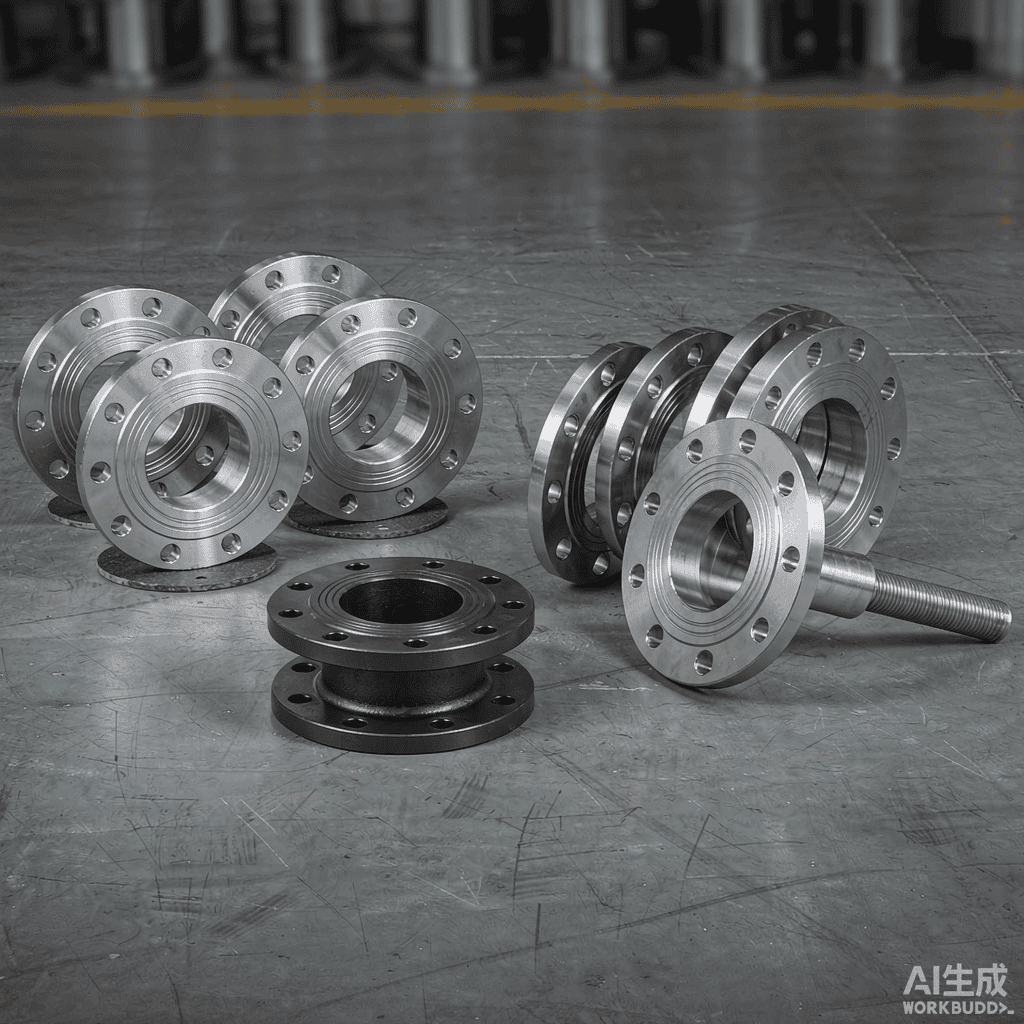
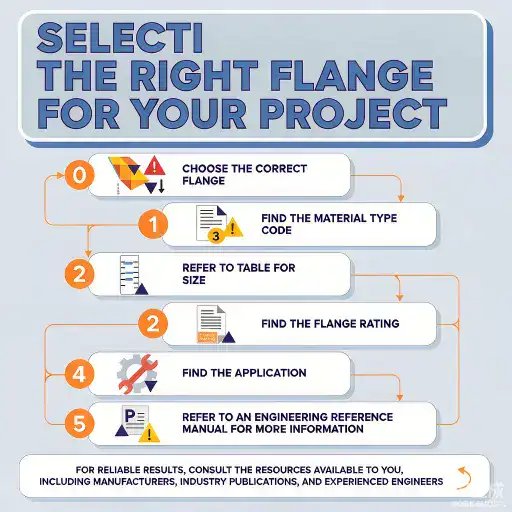
Selecting the right flange for your project is critical for ensuring system integrity, safety, and cost-effectiveness. With numerous flange types, materials, and standards available, making the wrong choice can lead to leaks, failures, and costly downtime.
In this comprehensive guide, we’ll walk you through the key factors to consider when choosing the right flange, helping you make informed decisions for your piping projects.
Why Flange Selection Matters
Flanges are essential components in piping systems, providing connections between pipes, valves, pumps, and other equipment. The right flange selection impacts:
- System Safety: Proper flange selection prevents leaks and failures
- Operational Efficiency: Correct flanges ensure optimal flow and performance
- Cost Management: Choosing the right flange balances performance and budget
- Maintenance Requirements: Appropriate flange selection reduces maintenance needs
- Compliance: Ensuring standards and specifications are met
Main Flange Types and Their Applications
Understanding the different flange types is the first step in making the right selection. Each type has specific advantages and is suited for particular applications.
1. Weld Neck Flange (WN)
Best for: High-pressure, high-temperature, and critical service applications
Key Characteristics:
- Long tapered hub for stress distribution
- Butt-welded connection for maximum strength
- Excellent for cyclic loading conditions
- Available in Class 150 to Class 2500
Typical Applications:
- Oil and gas pipelines
- Power generation plants
- Chemical processing
- Refinery systems
Pros: ✓ Superior strength and durability ✓ Excellent stress distribution ✓ Ideal for high-pressure service ✓ Good for thermal cycling
Cons: ✗ Higher cost than other types ✗ Requires skilled welding ✗ Longer installation time
When to Choose: Use weld neck flanges for pressure classes above Class 300, high-temperature applications, critical service, or where fatigue life is important.
2. Slip-On Flange (SO)
Best for: Low to medium pressure, non-critical applications
Key Characteristics:
- Slides over the pipe before welding
- Fillet weld on both inside and outside
- Lower cost than weld neck flanges
- Easier and faster installation
Typical Applications:
- Water systems
- Low-pressure steam
- General industrial piping
- Non-critical utilities
Pros: ✓ Lower cost ✓ Easier installation ✓ Good for low-pressure service ✓ No beveling required on pipe
Cons: ✗ Weaker than weld neck flanges ✗ Not suitable for high pressure ✗ Higher stress concentration
When to Choose: Select slip-on flanges for low-pressure applications (Class 150-300), non-critical services, or when budget is a concern.
3. Socket Weld Flange (SW)
Best for: Small diameter pipes (typically 2″ and below)
Key Characteristics:
- Pipe inserts into a recessed area
- Fillet weld around the outside
- Good for high-pressure small bore lines
- No pipe beveling required
Typical Applications:
- Instrumentation lines
- Small bore piping
- High-pressure utility lines
- Instrument connections
Pros: ✓ Good for small diameter pipes ✓ No pipe preparation needed ✓ Strong joint for small sizes ✓ Easy alignment
Cons: ✗ Limited to small pipe sizes ✗ Gap must be maintained for thermal expansion ✗ Not suitable for corrosive services
When to Choose: Use socket weld flanges for pipe sizes 2″ and below, high-pressure service, or when pipe beveling is not practical.
4. Blind Flange (BL)
Best for: Closing pipe ends, pressure vessel openings, or future connections
Key Characteristics:
- Solid flange with no center opening
- Used to cap or blank off piping
- Can be removed for future expansion
- Simple design with no flow passage
Typical Applications:
- Pipe end closures
- Pressure vessel openings
- Future connection points
- Valve isolation
Pros: ✓ Simple and economical ✓ Effective closure ✓ Easy to remove for maintenance ✓ Versatile use
Cons: ✗ Not for flowing service ✗ Creates a dead end ✗ Limited to specific applications
When to Choose: Select blind flanges for closing pipe ends, isolating sections, or providing future connection points.
5. Lap Joint Flange (LJ)
Best for: Applications requiring frequent disassembly or alignment adjustments
Key Characteristics:
- Loose flange that slides over the pipe
- Used with a stub end
- Allows easy alignment
- Suitable for limited space installations
Typical Applications:
- Pipe systems requiring frequent adjustment
- Applications with limited space
- Carbon steel flanges with stainless stub ends
- Cost-sensitive projects
Pros: ✓ Easy alignment ✓ Can rotate for maintenance ✓ Less expensive material options ✓ Good for tight spaces
Cons: ✗ Requires stub end ✗ More components ✗ Not as strong as weld neck
When to Choose: Use lap joint flanges when frequent disassembly is needed, space is limited, or when using expensive materials for the stub end only.
Flange Selection Criteria: Step-by-Step Guide
Choosing the right flange requires careful consideration of multiple factors. Follow this systematic approach to make the best decision.
Step 1: Determine Operating Conditions
Pressure and Temperature:
- Maximum operating pressure
- Minimum operating temperature
- Pressure cycling frequency
- Temperature fluctuations
Why it matters: These parameters determine the pressure class and material requirements. Higher pressures require thicker flanges and stronger materials.
Step 2: Identify the Media Being Handled
Fluid Properties:
- Corrosive or non-corrosive
- Clean or dirty (slurries, particulates)
- Toxic or hazardous
- Cleanliness requirements (food, pharmaceutical)
Why it matters: Media compatibility determines material selection. Corrosive fluids require stainless steel or special alloys.
Step 3: Consider Installation Requirements
Available Space:
- Accessibility for welding
- Bolt tightening space
- Alignment constraints
Installation Conditions:
- On-site or shop fabrication
- Field welding vs. pre-fabricated
- Temporary or permanent installation
Why it matters: Space constraints may favor lap joint or socket weld flanges. Field welding may require simpler flange types.
Step 4: Evaluate Maintenance Needs
Access Frequency:
- How often will the connection be opened?
- Ease of gasket replacement
- Bolt access requirements
Why it matters: Frequently accessed connections benefit from lap joint flanges. Permanent connections can use weld neck flanges.
Step 5: Check Applicable Standards
Industry Standards:
- ASME B16.5 (American standards)
- EN 1092-1 (European standards)
- DIN standards (German)
- JIS standards (Japanese)
Project Specifications:
- Client requirements
- Industry codes (API, AWS, etc.)
- Quality certifications needed
Why it matters: Different regions and industries have different standards. Ensure compliance with project specifications.
Step 6: Budget Considerations
Initial Cost:
- Material costs
- Manufacturing costs
- Installation costs
Lifecycle Cost:
- Maintenance requirements
- Replacement frequency
- Downtime costs
Why it matters: While cheaper flanges may seem attractive initially, consider total lifecycle costs. A higher-quality flange may save money long-term.
Flange Type Selection Matrix
Use this quick reference guide to select the appropriate flange type based on your application.
| Application Type | Recommended Flange | Pressure Class | Material |
| High-pressure oil & gas | Weld Neck | Class 300+ | Carbon steel, SS316 |
| Power plant piping | Weld Neck | Class 600+ | Alloy steel, SS316 |
| Chemical processing | Weld Neck | Class 150-1500 | SS304, SS316, duplex |
| Water treatment | Slip-On | Class 150-300 | Carbon steel |
| Steam systems | Weld Neck or Slip-On | Class 150-600 | Carbon steel |
| Instrumentation lines | Socket Weld | Class 300-1500 | SS316 |
| Pipe end closure | Blind | Any class | Match system |
| Frequent maintenance | Lap Joint | Class 150-300 | Carbon steel/SS |
| Small bore high pressure | Socket Weld | Class 300+ | SS316, alloy steel |
| General industrial | Slip-On | Class 150-300 | Carbon steel |
| Offshore platforms | Weld Neck | Class 600+ | Duplex, super duplex |
Material Selection Guide
Choosing the right material is as important as selecting the flange type.
Carbon Steel Flanges
Common Grades:
- ASTM A105 (Carbon steel forgings)
- ASTM A350 LF2 (Low-temperature service)
- ASTM A182 F11/F22 (Chrome-moly alloy)
Best for:
- General industrial applications
- Oil and gas pipelines
- Power generation
- Water systems
Temperature Range: -29°C to 425°C (-20°F to 800°F)
Advantages: ✓ Cost-effective ✓ Good mechanical properties ✓ Widely available ✓ Easy to fabricate
Stainless Steel Flanges
Common Grades:
- ASTM A182 F304/SS304 (General corrosion resistance)
- ASTM A182 F316/SS316 (Chloride resistance)
- ASTM A182 F321 (High-temperature service)
- ASTM A182 F44 (Duplex stainless)
Best for:
- Chemical processing
- Pharmaceutical industry
- Food and beverage
- Marine environments
- High-purity systems
Temperature Range: -196°C to 800°C (-321°F to 1472°F)
Advantages: ✓ Excellent corrosion resistance ✓ Hygienic surface ✓ High-temperature capability ✓ Aesthetic appearance
Alloy Steel Flanges
Common Grades:
- ASTM A182 F11 (1.25Cr-0.5Mo)
- ASTM A182 F22 (2.25Cr-1Mo)
- ASTM A182 F91 (9Cr-1Mo-V)
Best for:
- High-temperature service
- Power plants
- Petrochemical refineries
- Crude oil pipelines
Temperature Range: Up to 650°C (1200°F)
Advantages: ✓ High-temperature strength ✓ Creep resistance ✓ Good oxidation resistance
Special Alloy Flanges
Common Grades:
- Inconel 625 (Nickel-chromium-molybdenum)
- Hastelloy C276 (Nickel-molybdenum-chromium)
- Titanium Gr2
- Monel 400
Best for:
- Highly corrosive environments
- Seawater applications
- Acid processing
- Aerospace industry
Advantages: ✓ Superior corrosion resistance ✓ High strength at temperature ✓ Specialized applications
Common Flange Faces and Gasket Selection
The flange face type affects gasket selection and sealing performance.
Raised Face (RF)
Description:
- Most common flange face type
- Raised surface around bolt circle
- Gasket seats on raised face
Best for:
- General industrial applications
- Pressures up to Class 300
- Non-critical services
Gasket Options:
- Spiral wound gaskets
- Ring joint gaskets (for higher pressure)
- Flat gaskets (PTFE, rubber)
Flat Face (FF)
Description:
- Entire flange face is flat
- Common in cast iron flanges
- Used with full-face gaskets
Best for:
- Low-pressure applications
- Cast iron systems
- Water and wastewater
Gasket Options:
- Full-face gaskets
- PTFE sheet gaskets
- Rubber gaskets
Ring Type Joint (RTJ)
Description:
- Oval or octagonal groove
- Metal-to-metal sealing
- Used for high pressure and temperature
Best for:
- High-pressure service (Class 600+)
- Oil and gas industry
- Wellhead equipment
Gasket Options:
- Ring joint gaskets (RTJ gaskets)
- Oval or octagonal cross-section
Tongue and Groove (T&G)
Description:
- Matching tongue and groove surfaces
- Self-centering design
- Good for corrosive services
Best for:
- Heat exchangers
- High-purity systems
- Corrosive media
Gasket Options:
- Usually metal-to-metal seal
- No additional gasket needed
Frequently Asked Questions (FAQ)
Q1: What is the most common flange type?
A: The most common flange type is the Weld Neck flange, especially in industrial piping systems. It’s preferred for its strength, reliability, and excellent stress distribution in high-pressure and high-temperature applications.
Q2: Can I use a slip-on flange instead of a weld neck flange?
A: While slip-on flanges are more economical, they are not recommended for high-pressure or critical service applications. Use slip-on flanges only for low-pressure, non-critical services where cost is a primary concern.
Q3: How do I know which pressure class to choose?
A: Pressure class selection depends on your operating pressure and temperature. Use ASME B16.5 pressure-temperature ratings to determine the appropriate class. Always consult with a qualified engineer for critical applications.
Q4: What is the difference between RF and RTJ flanges?
A: Raised Face (RF) flanges use a flat raised surface with a gasket for sealing, suitable for moderate pressures. Ring Type Joint (RTJ) flanges use a metal ring gasket in a groove, designed for high-pressure and high-temperature service.
Q5: Should I choose American or European standard flanges?
A: The choice depends on your region and project requirements. American standards (ASME/ANSI) are common in North America and many international projects. European standards (EN/DIN) are used in Europe and some Asian countries. Choose based on your project specifications and local code requirements.
Conclusion
Choosing the right flange for your project requires careful consideration of operating conditions, media characteristics, installation requirements, maintenance needs, and budget constraints. By following the systematic approach outlined in this guide, you can make informed decisions that ensure system integrity, safety, and cost-effectiveness.
At Oucang Valve, we offer a comprehensive range of flange types, materials, and standards to meet your specific project requirements. Our experienced team can provide technical consultation to help you select the optimal flange solution.
Ready to Get the Right Flanges for Your Project?
Oucang Valve specializes in manufacturing high-quality flanges with over 20 years of industry experience. Whether you need standard or custom flanges, we can provide solutions that meet your exact specifications.
Contact us today for:
- Free technical consultation
- Competitive factory pricing
- Fast delivery times
- Custom OEM solutions
- Full material certifications
References and Further Reading
- ASME B16.5: Pipe Flanges and Flanged Fittings
- EN 1092-1: Flanges and their joints
- API 6A: Wellhead and Christmas Tree Equipment
- MSS SP-44: Steel Pipeline Flanges
- ISO 7005: Flanges